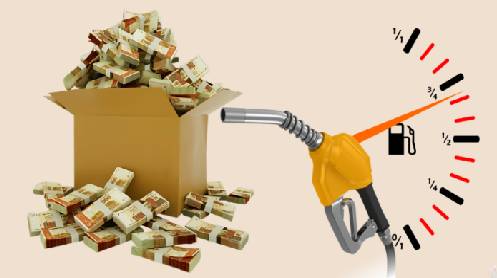
ISLAMABAD: The government is expected to increase the petroleum levy (PL) even as global oil prices decline, amid mounting fiscal pressure and a significant revenue shortfall faced by the Federal Board of Revenue (FBR).
Officials indicated that the move is being considered to offset a Rs610 billion shortfall in tax collection during July–March of the current fiscal year. Petroleum levy collections, a key non-tax revenue source, are also under scrutiny as the government seeks to meet its fiscal targets.
Global oil prices have dropped sharply—by nearly 14%—following the announcement of a two-week ceasefire between the US, Israel, and Iran, with negotiations set to begin in Islamabad. Brent crude has fallen to around $94 per barrel, raising expectations of significant relief in domestic fuel prices.
However, sources in the Ministry of Finance and Petroleum Division suggest that the government may not fully pass on the benefit to consumers. Instead, part of the price reduction could be absorbed through a higher petroleum levy to ease pressure on the budget deficit.
Unconfirmed reports also suggest that the International Monetary Fund has urged Pakistan to phase out fuel subsidies. In response, the government is considering a targeted subsidy mechanism through petrol cards for low-income motorcyclists, capped at 20 litres per month. This subsidy would likely be financed through cross-subsidisation by increasing the levy on other consumers.
FBR’s total collection for July–March stood at Rs9.307 trillion against a revised target of Rs9.917 trillion, while March alone saw a shortfall of Rs182 billion—the highest monthly gap this fiscal year.
Despite the global price decline, domestic fuel prices may still see partial relief. Estimates suggest that high-speed diesel (HSD) prices could fall by up to Rs60 per litre, while petrol prices may decrease by Rs30–35 per litre, depending on final calculations.
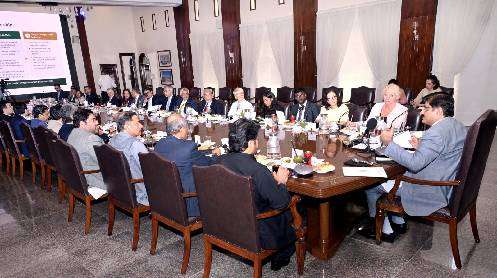
Prime Minister Shehbaz Sharif has directed the petroleum pricing committee to ensure that any savings are passed on to the public, with a 48-hour monitoring window in place to finalise new rates.
The government has set a petroleum levy collection target of Rs1.47 trillion for FY2025-26, with Rs871 billion already collected during the first seven months. However, the IMF had earlier projected a shortfall of Rs157 billion in levy collections, even before the recent Middle East conflict.
Analysts believe the government now faces a delicate balancing act between providing relief to consumers and maintaining fiscal discipline, as it navigates volatile global energy markets and tight budgetary constraints.
Story by Sohail Sarfraz Wasim Iqbal Tahir Amin